
A practical astronomy resource
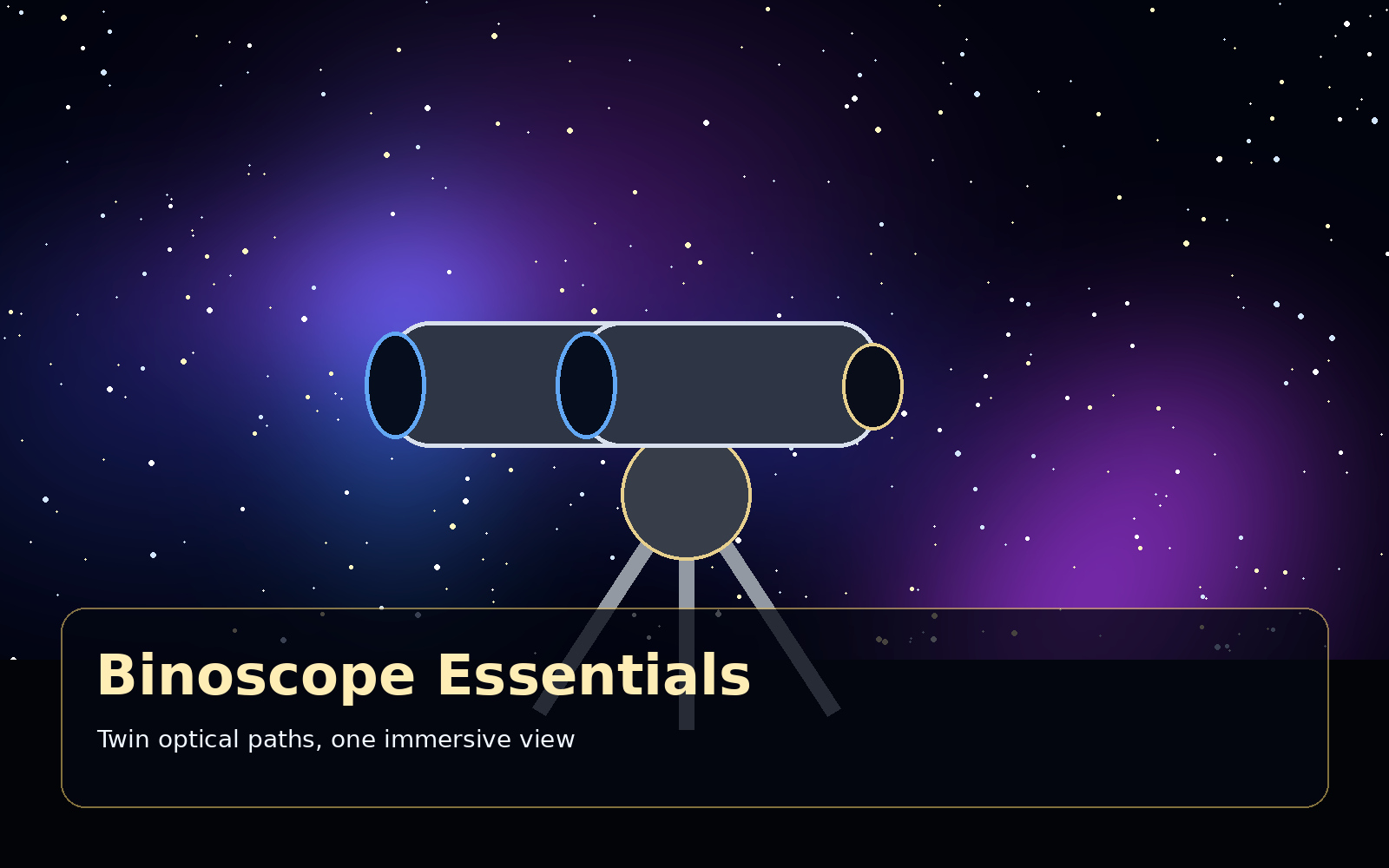
Binoscopes is an independent astronomy publication focused on binocular telescopes, two-eye observing, optical setup, collimation, mounting and practical observing technique.
Optics without unnecessary jargon
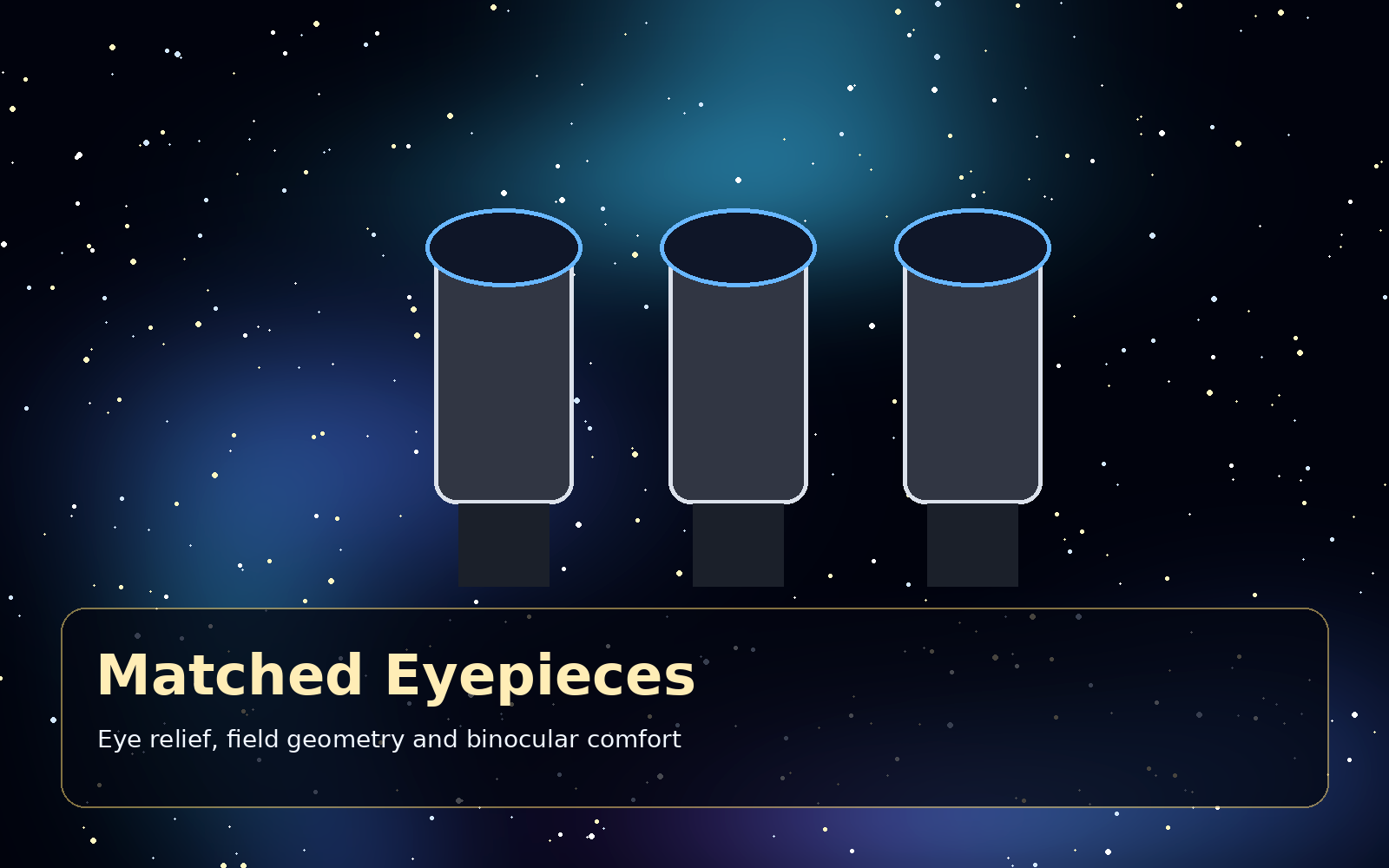
We explain aperture, magnification, exit pupil, field of view and collimation in terms of what they change at the eyepiece.
Setup matters
A premium optical system is frustrating on an unstable mount or with poor collimation. Our guides treat mechanics and ergonomics as part of optical performance.
Observing is the goal
The site ultimately exists to help readers spend more time under the sky. Equipment is useful when it makes observing easier, more comfortable and more rewarding.
Independent perspective
We focus on concepts that remain valid across brands and models. Where personal preference matters, we make the trade-off explicit.
Build knowledge gradually
Start with the basics, then move into aperture, eyepieces, mounting, alignment and target-specific observing.
Why binoscopes deserve their own guide
A binoscope sits between familiar binoculars and conventional telescopes. It combines large objectives, interchangeable eyepieces and stable mounting with the comfort of two-eye viewing. That mix creates unique questions about collimation, interpupillary distance, eyepiece size and mount geometry.
Start with the basics
If you are new to the subject, begin with what a binoscope is, then learn aperture, magnification, exit pupil and field of view. After that, move into collimation, focusing and mounting. The observing guides make more sense once those foundations are clear.
Keep a simple observing log
A short observing log can make equipment decisions much clearer. Record the target, sky conditions, eyepiece pair, approximate magnification, focusing comfort and whether image merging remained effortless. After several sessions, patterns become easier to see and adjustments can be based on repeated experience instead of one unusually good or bad night.
Frequently Asked Questions
Is binoscopes — binocular astronomy & two-eye observing important for beginners?
It can be, but beginners do not need to master every detail immediately. Start with the concept that affects comfort or image quality most directly, then add complexity as your observing experience grows.
Do larger binocular telescopes always give a better view?
No. Larger aperture gathers more light, but it also increases weight, mounting demands and cost. A smaller instrument that is well mounted and easy to use can be the better choice.
Why is setup quality so important in two-eye observing?
Both optical paths must work together. Poor alignment, unstable support or mismatched focus can create eye strain even when each tube is individually sharp.